
PFR plug-flow reactors
The plug-flow anaerobic reactor for solid biomass
Table of contents
What an anaerobic PFR is and what it is used for
This type of reactor uses plug flow, in which the organic material moves slowly and uniformly through the digester without the need for continuous mixing. The process takes place under anaerobic conditions, meaning in the absence of oxygen, allowing the biomass to be converted into biogas.
These reactors are mainly used for renewable energy production, optimizing biogas yield while minimizing issues related to odour emissions.
Discover the feasibility of your project
How does the PFR work
Advantages of the PFR
From an engineering and process perspective, PFR offers numerous advantages:
- Suitable for small digestion volumes and highly fibrous biomass or feedstocks rich in impurities: it optimizes yield in limited spaces and with more challenging materials such as fibres
- It helps reduce the volume of liquid digestate to be managed, thanks to the lower need for dilution water
- Efficiency and precise process control, thanks to the sequential separation of the anaerobic digestion stages
- It enables a more controlled retention time for biomass in the digester, reducing the risk of fresh material bypass and promoting more effective degradation of the organic fraction
- Reduced electricity consumption, thanks to the absence of continuous mixing
Straw
High-fibre manure
Lignocellulosic by-products
OFMSW with a high impurity content
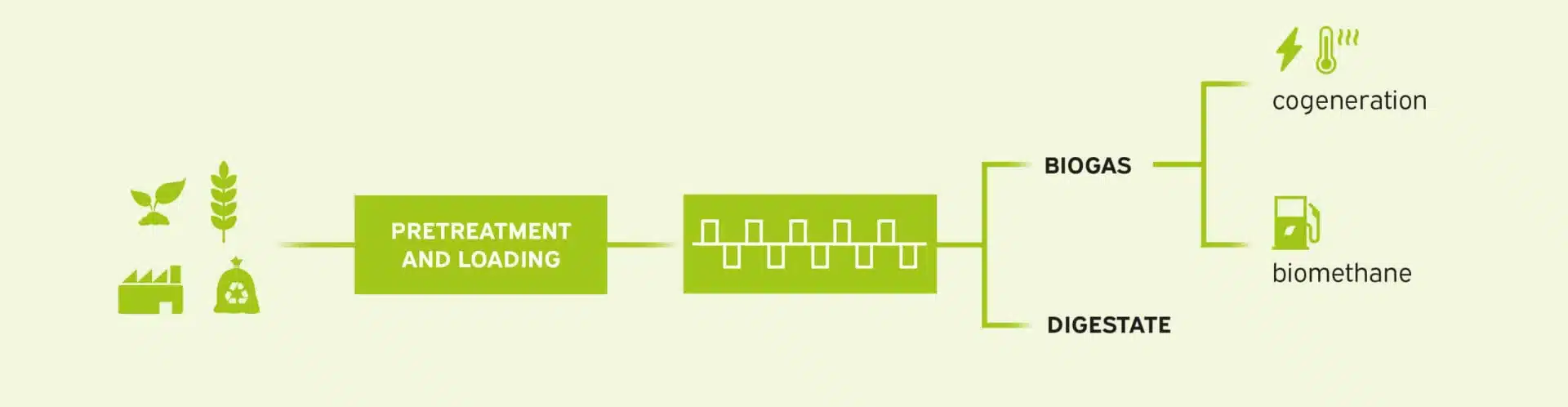
How does the PFR work
- A pretreatment system selected according to the specific characteristics of the biomass and designed to maximise the anaerobic digestion process
- Material handling systems that ensure the substrate moves slowly and steadily through the reactor
- A heating system to maintain the ideal thermal conditions for digestion
- Biogas extraction systems that collect the biogas produced by the process
- A pumping system or screw conveyors for feeding and discharging the digestate.

DRY SUBSTANCE

THERMAL REGIME

HYDRAULIC RETENTION TIME

MIXING SYSTEM
The digestion process also takes place under mesophilic conditions, at approximately 40 °C, or thermophilic conditions, at approximately 50–55 °C, with retention times ranging from 20 to 60 days depending on the types of biomass used to feed the plant.
PFR enables the construction of high-performance biogas production plants, making effective use of biomass with a higher dry substance content.
Technology supplied in partnership with Arciplug® — patented Plug-Flow technology.
Get More Information
Submit your request and we will get back to you by email or phone as soon as possible.
* All fields are required.